📺 Watch the Full Video Analysis
This article was automatically generated by the NFC Market Live AI analysis system. (Updated: 2026-09-03 00:21 JST)
📄 Primary Source
NFC Market Live
https://www.youtube.com/watch?v=CdSGVg403wY
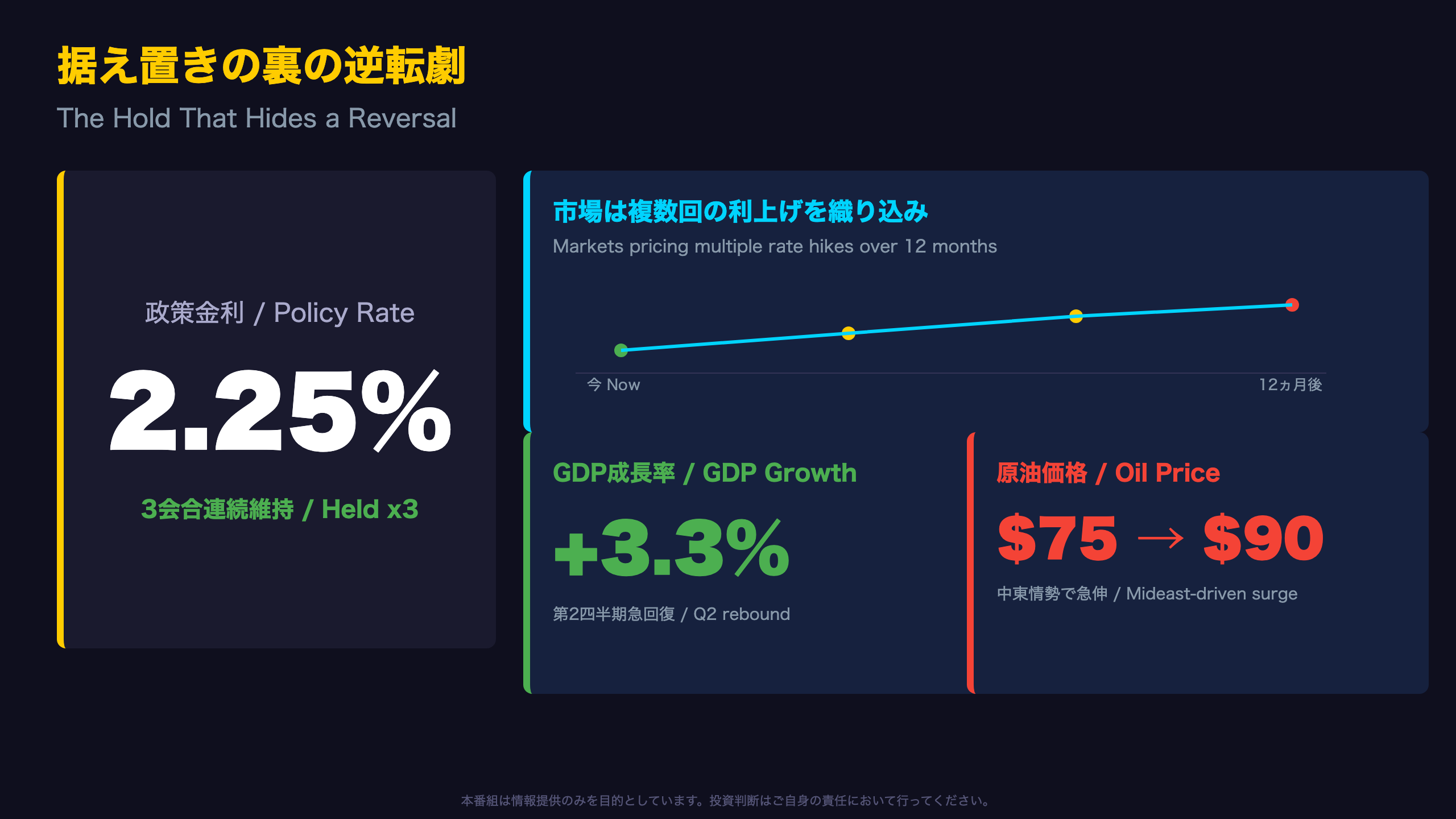
The Bank of Canada held its policy rate at 2.25% 📊, matching expectations after data came in broadly in line with July’s forecast.
But the press conference revealed a twist: swap markets are now pricing multiple rate hikes over the next 12 months. 📈
Q2 GDP rebounded sharply to 3.3%, with exports, investment and hiring all improving.
Yet oil prices jumped from a forecasted $75 to roughly $90/barrel ⚠️, driven by the Middle East conflict and Strait of Hormuz disruptions.
Growth strength versus inflation risk — this tension will shape the BoC’s next move. 💡
総括:据え置きの裏の逆転劇 / The Hold That Hides a Reversal
Beyond the Headline Hold
The Bank of Canada (BoC) held its policy rate at 2.25% at its September meeting, describing incoming data as “broadly in line” with its July forecast. The decision itself was no surprise.
What stood out in the press conference, however, was a growing disconnect between the BoC’s cutting-cycle history and market pricing. Asked by Robert McLister of Mortgage Logic News, Governor Macklem confirmed that swap and forward markets are pricing in a high probability of three rate hikes over the next 12 months — a striking reversal for a central bank that had been in easing mode.
“If we felt that inflation was going to remain too high, yes, we are prepared to raise interest rates… if it takes more than one increase, we’re prepared to do that.”
Two forces explain this shift: a sharp GDP rebound to 3.3% annualized in Q2, and an oil price surge from a forecasted $75 to roughly $90/barrel, driven by the Middle East conflict. For international investors, this is a reminder that Canada’s rate path — despite a “hold” headline — is not simply dovish. The following slides unpack both drivers.
成長の急回復ー広がる需要の裾野 / The Broad-Based Growth Rebound
Breaking Down the “Broad-Based” Rebound
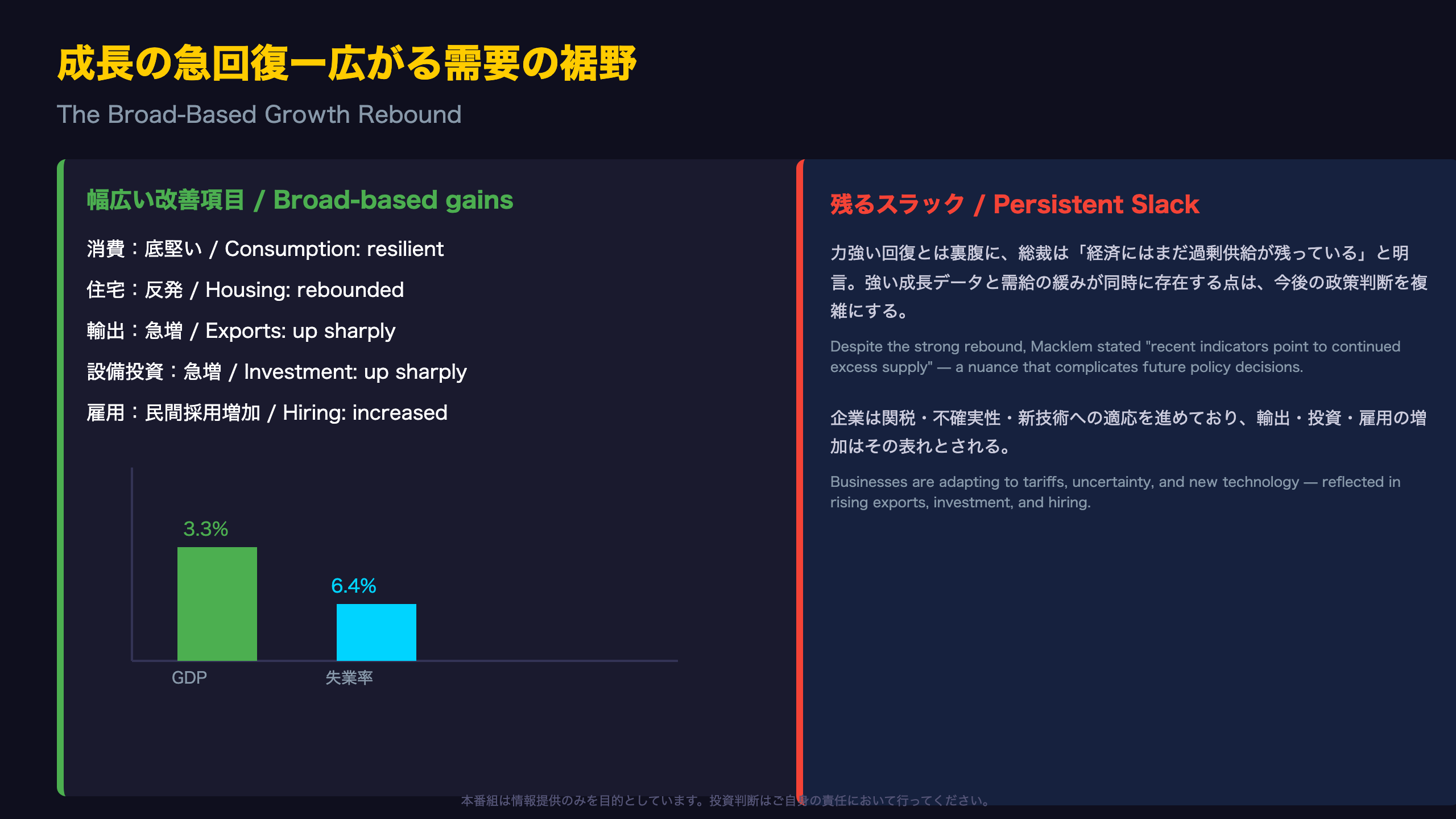
Governor Macklem’s characterization of the rebound as “broad-based” is backed by specifics laid out in the statement and Q&A:
- Consumption: resilient
- Housing: rebounded after several weak quarters
- Exports: up sharply
- Business investment: up sharply
- Employment: increased private-sector hiring
- Unemployment rate: fell to 6.4% in July
Yet in the same breath, Macklem noted that “recent indicators point to continued excess supply in the economy” — economist-speak for persistent slack, or an output gap. That’s a nuanced signal: a strong quarterly growth print coexisting with a labor/output market not yet at capacity.
For context, US readers should note Canada’s smaller, trade-exposed economy makes it more sensitive to swings in exports and business investment than the US framework typically implies.
“The increases in exports, investment and hiring are broadly consistent with what businesses have been telling us [about] adapting to tariffs, uncertainty and new technology.”
This lingering slack is a disinflationary counterweight to the oil-driven upside risks discussed next — a balance the BoC will have to reconcile in its next forecast round.
インフレの正体ー原油とホルムズ海峡 / Inflation’s True Driver: Oil
Headline vs. Core: A Story of Oil, Not Tariffs
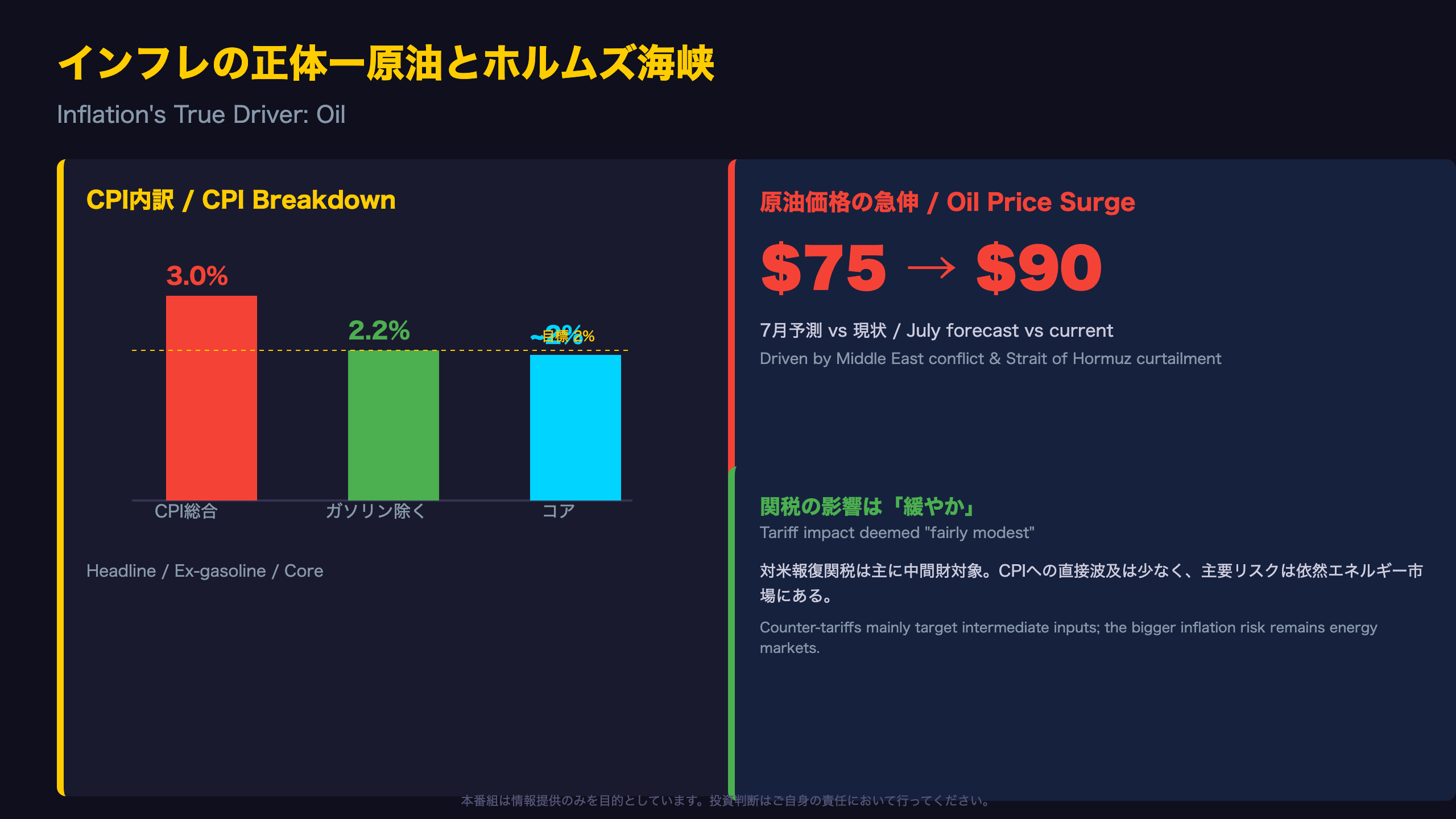
At first glance, 3% inflation sounds uncomfortably high for a 2%-target economy. But the composition matters:
- Headline CPI: ~3% in recent months
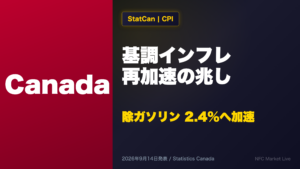
- CPI excluding gasoline: 2.2% in July
- Core inflation measures: “close to 2%” (no specific figure given in the source)
Nearly the entire gap traces back to oil and gasoline. The Middle East conflict remains unresolved, and shipments through the Strait of Hormuz — a chokepoint for a large share of global oil flows — remain curtailed. The BoC’s July forecast assumed oil at $75/barrel for Q3; as Reuters’ Pramit Mukherjee noted in the Q&A, it’s now trading near $90.
“The longer oil prices and refinery margins stay high, the greater the risk that higher energy prices spill over and turn into persistent inflation.”
For US readers: this differs from the tariff-driven inflation debate dominating Fed discussions. Macklem was explicit that retaliatory counter-tariffs (effective September 8) are expected to have only a “fairly modest” inflationary impact, since they mostly hit intermediate inputs rather than finished consumer goods. The larger inflation risk, in the BoC’s own words, is “really what’s going on in energy markets” — not trade policy.
利上げ観測の正体:グローバル債券市場の波紋 / Why Markets Are Pricing Hikes
Decoding the “Multiple Hikes” Market Pricing
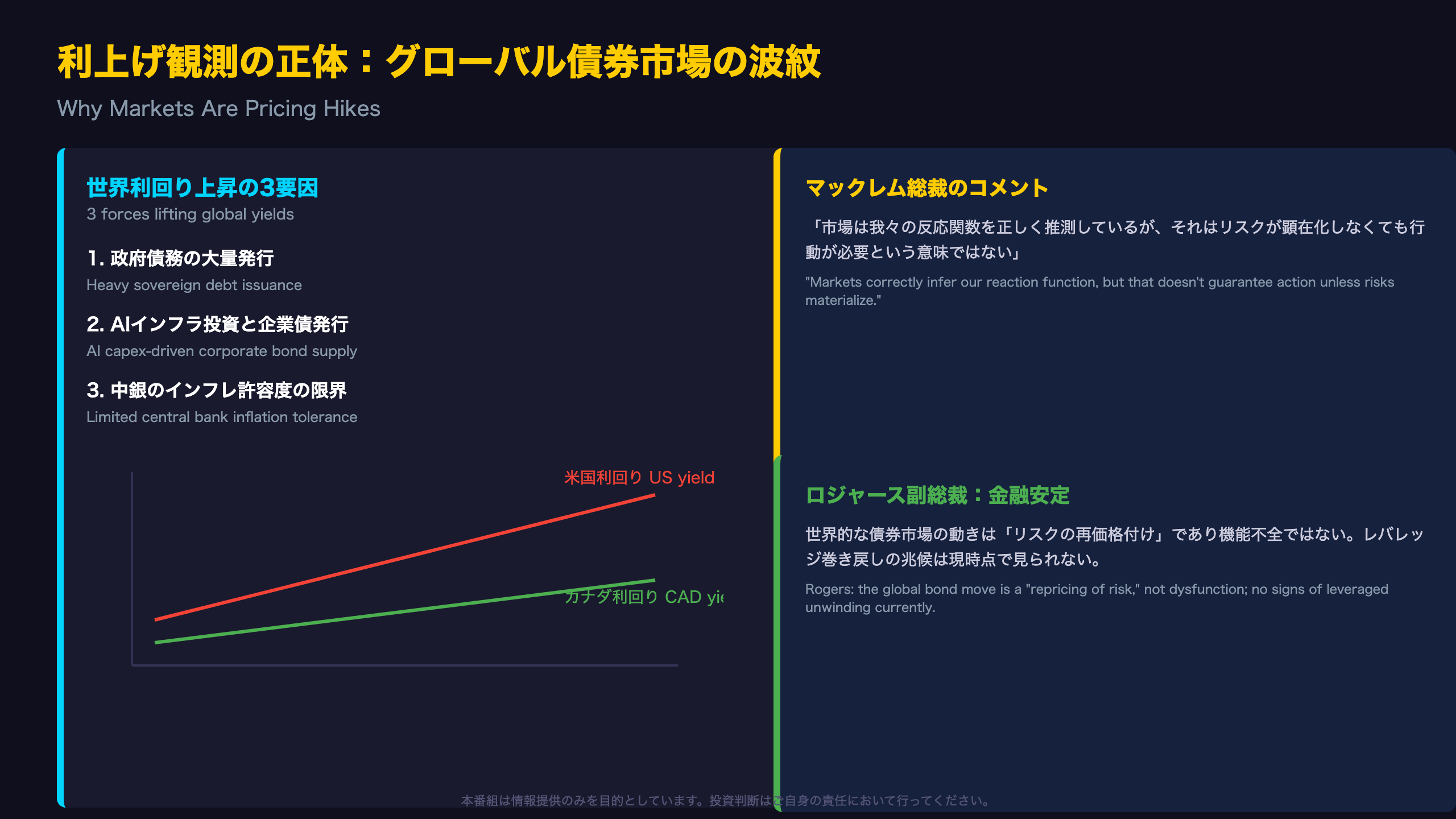
The sharpest question came from Robert McLister of Mortgage Logic News, who noted that swap and forward markets are pricing a high implied probability of three rate hikes over the next 12 months. Given the BoC’s recent easing-cycle history, that’s a notable signal worth unpacking for readers unfamiliar with Canadian rate dynamics.
Governor Macklem attributed the global bond yield rise to three intertwined forces:
- Heavy sovereign debt issuance — large government debt loads need to be absorbed by markets
- AI infrastructure-driven corporate bond demand — the AI capex boom is pushing more corporate debt issuance
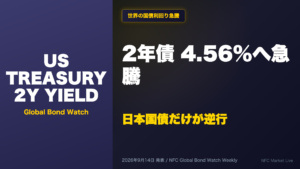
- Limited central bank inflation tolerance — elevated oil prices are pushing markets to price the risk that central banks may need to act
Importantly, Macklem noted Canada’s yield curve sits roughly a percentage point or more below the US curve, reflecting Canada’s stronger fiscal position, lower inflation, weaker economy, and the flexibility of its floating exchange rate combined with inflation targeting — a structural distinction US investors should keep in mind.
“The fact that markets sort of understand our reaction function… they, I think, quite correctly infer that… that’s getting our attention. But that doesn’t mean we don’t need to do something if ultimately those risks materialize.”
Senior Deputy Governor Carolyn Rogers added a financial-stability angle, characterizing the recent global bond move as “a repricing of risk” rather than dysfunction, noting the Bank sees no signs of leveraged unwinding or repo-market spillover “right now.”
両論のはざまでースラックと原油の綱引き / Between Slack and Oil
What to Watch Next
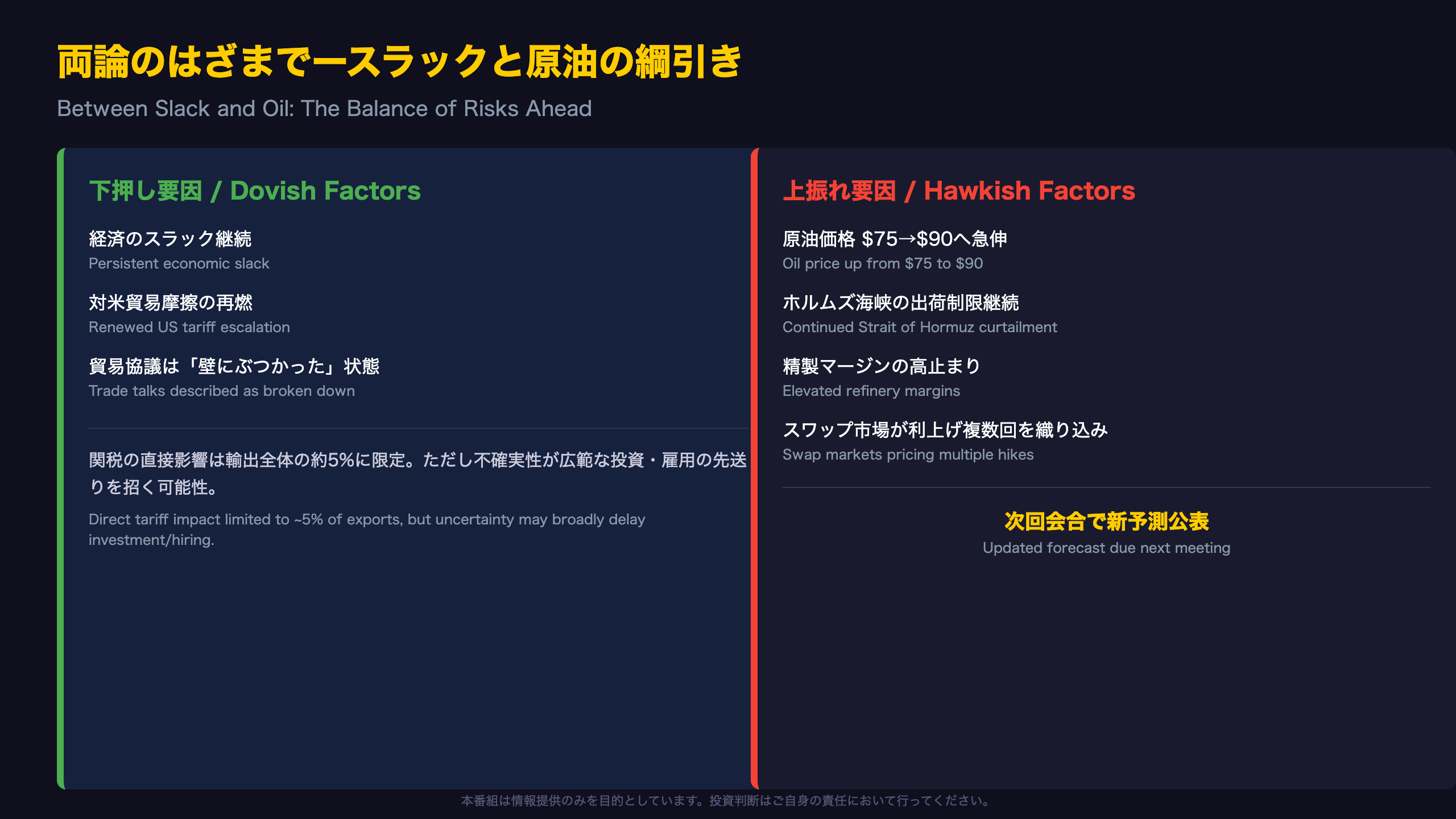
Stripping away the “hold” headline, the BoC’s September decision is really a statement about two offsetting risks that remain live.
Disinflationary / dovish factors
– Continued economic slack (excess supply)
– Renewed US tariff escalation risks delaying business investment and hiring more broadly
– Trade talks described as having hit “a breakdown”
Inflationary / hawkish factors
– Oil prices up from a forecasted $75 to roughly $90/barrel
– Continued Strait of Hormuz shipping curtailment
– Elevated refinery margins
– Swap markets pricing multiple rate hikes over 12 months
Macklem was clear the rate path is not mechanical: “where we go on interest rates is really going to be guided by our inflation forecasts and our risks around that.”
“[Tariffs] represent about 5% of exports to the United States, and the federal government’s support programs will likely mitigate some of the harm.”
That said, reading the 5% figure as purely reassuring may be premature — Macklem himself flagged that heightened uncertainty “could cause more businesses more broadly to delay investment and hiring decisions,” a psychological chilling effect extending well beyond direct trade exposure.
For international investors tracking CAD and Canadian rates: the next BoC meeting will bring an updated forecast. The key swing factors are (1) whether elevated oil prices bleed into broader consumer prices, and (2) how far the renewed US-Canada trade dispute’s dampening effect spreads through investment and hiring data.
Disclaimer: This article is for informational purposes only. All investment decisions are made solely at your own risk.