📺 Watch the Full Video Analysis
This article was automatically generated by the NFC Market Live AI analysis system. (Updated: 2026-10-29 00:30 JST)
📄 Primary Source
NFC Market Live
https://www.youtube.com/watch?v=4y3B0tx7y_8
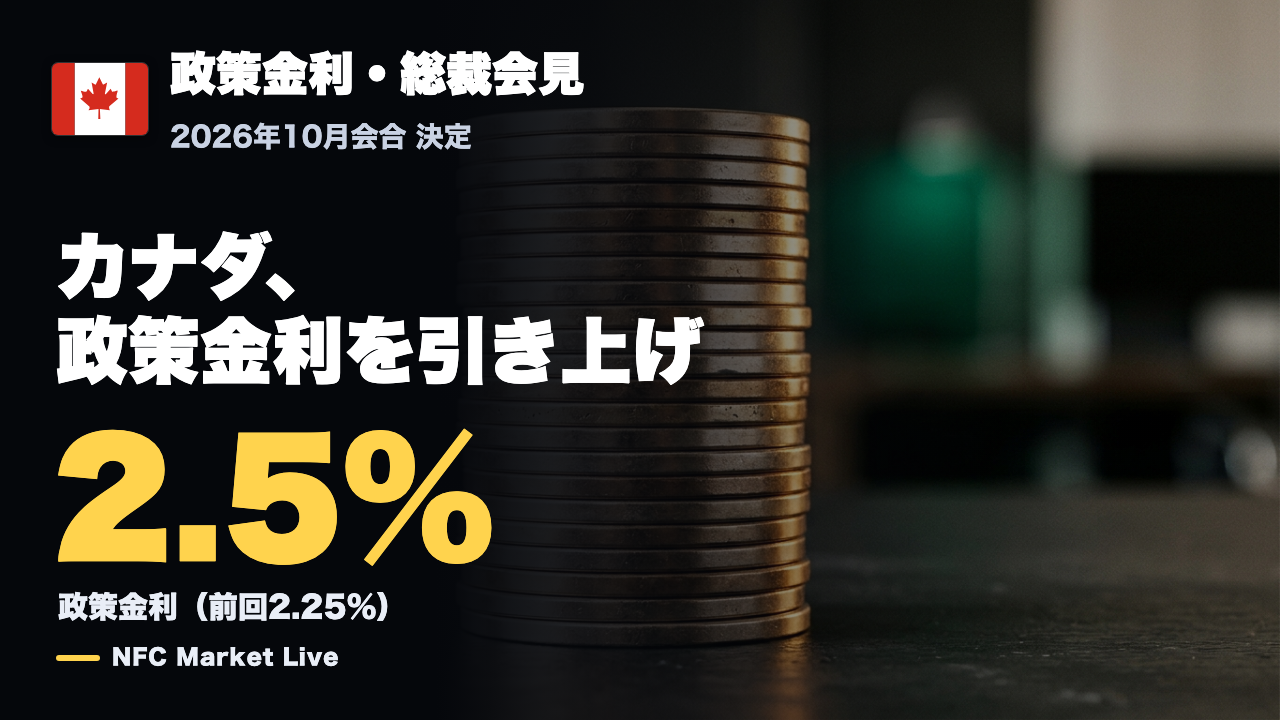
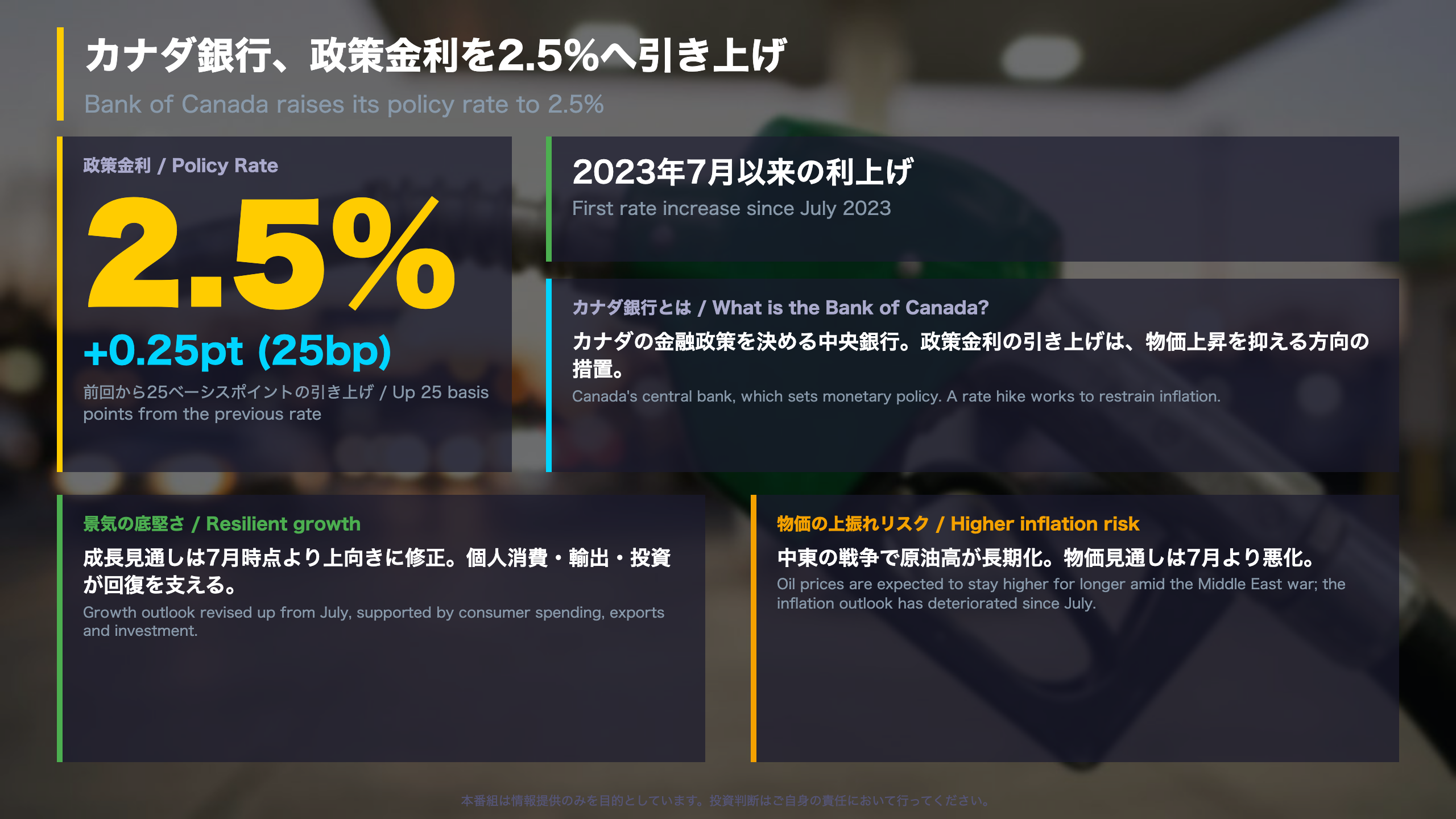
📊 The Bank of Canada raised its policy rate by 25 basis points to 2.5%, the first hike since July 2023.
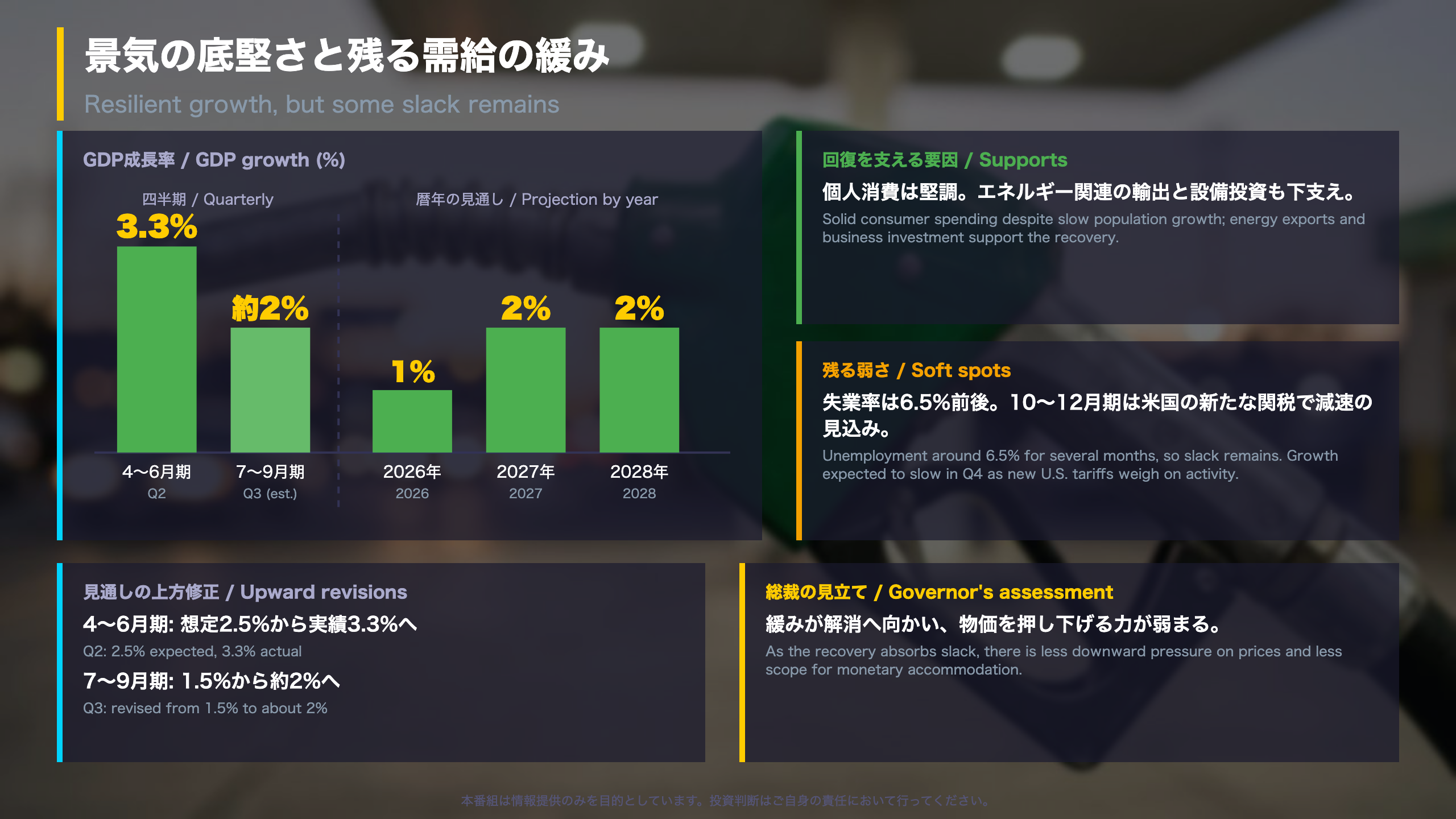
📈 Growth has been resilient: Q2 GDP rose 3.3%, and 2% growth is projected for 2027 and 2028.
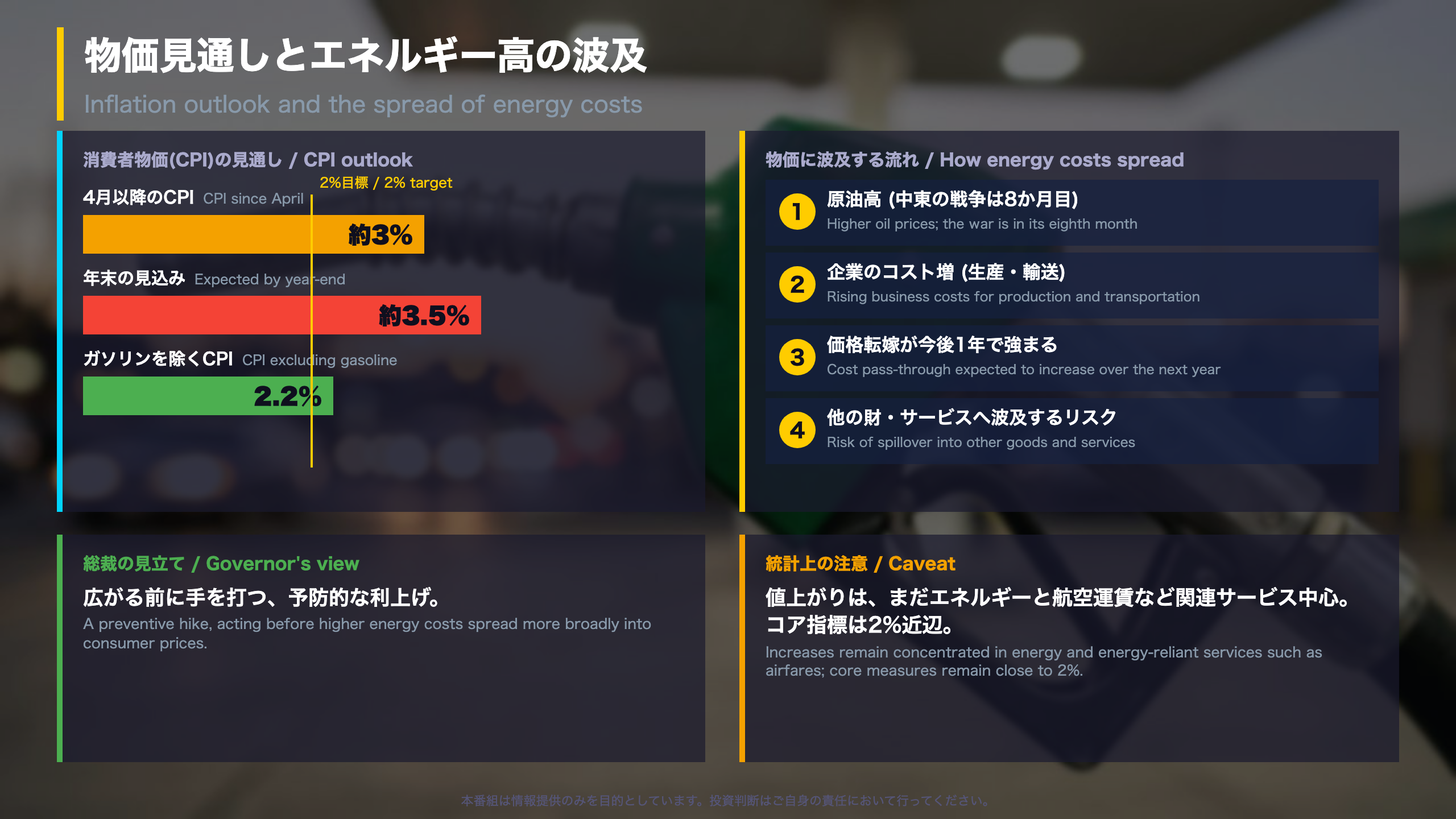
⚠️ But the war in the Middle East is keeping oil prices high, and CPI inflation is expected to reach about 3.5% by year-end. CPI excluding gasoline is 2.2%, and holding was also debated.
💡 Governor Macklem stressed that decisions will be taken one meeting at a time, with no predetermined path. Further increases could be needed, but the Bank will proceed carefully.
Next up: the December meeting.
カナダ銀行、政策金利を2.5%へ引き上げ
What the Bank of Canada Did
The Bank of Canada (BoC), the country’s central bank, raised its overnight policy rate by 25 basis points to 2.5%, the first increase since July 2023. Governing Council debated two options, hold or hike, and described the decision as backed by a clear consensus.
Why it matters
The BoC targets 2% CPI inflation, the midpoint of a 1-3% control range. Unlike the Fed, it has no formal dual mandate, though growth and slack clearly feed into its judgment. Canada is also a large energy exporter, which is why oil prices cut both ways: they lift inflation and boost energy-sector activity.
Two developments since the July report
- Inflation outlook worsened: the Middle East war has pushed oil prices up and they are expected to stay higher for longer.
- Growth outlook improved modestly: despite continued U.S. trade actions, growth picked up through mid-year.
Key projections
| Item | Projection |
|---|---|
| CPI inflation | About 3% since April; about 3.5% by year-end; near 2% by mid-2028 |
| GDP growth | 1% in 2026; 2% in 2027 and 2028 |
| Unemployment | Around 6.5% for several months |
Balanced reading
The case for hiking rests on persistent energy costs and building pass-through. The case for holding rests on CPI excluding gasoline at 2.2%, core measures near 2%, and remaining slack. The Governor said the BoC will take decisions one meeting at a time and that further increases could be needed.
What to watch
The next decision is at the December meeting. Key indicators are how far energy costs spread into broader consumer prices and how growth holds up against new U.S. tariffs.
解説1:物価見通しとエネルギー高の波及
Reading the Inflation Outlook
The numbers in context
CPI inflation has run near 3% since April and is projected to rise to about 3.5% by year-end. It stays at or above 3% through much of 2027 and returns close to the 2% target only by mid-2028. By contrast, CPI excluding gasoline is 2.2% and core measures remain near 2%.
For English-speaking readers: the BoC publishes several core inflation gauges, which strip out volatile components. Their proximity to 2% is the main argument for patience, while headline CPI near 3% is the main argument for action.
Evidence on pass-through
- Imported industrial and electronics prices have also risen, not just fuel.
- Short-term household and business inflation expectations have risen, while longer-term expectations remain well anchored.
- Bank surveys and past experience both suggest businesses will pass more costs through over the next year.
“We don’t want them to pay for this twice.”
Hold versus hike
| Argument | Hold | Hike |
|---|---|---|
| Prices | Increases concentrated in energy and energy-reliant services such as airfares | The longer energy stays high, the likelier the spillover |
| Economy | Slack remains; new U.S. tariffs weigh on growth | Recovery means less downward pressure on prices |
Timeline
In a September speech the Governor said that if oil stayed at $100, inflation would drift up from 3%. Six weeks later oil was a little over $100, and the new projection reflects the full implication.
What to watch
Because the stance is to move one meeting at a time, the data to track before December are headline CPI, CPI excluding gasoline and the core measures. This is a reading of the Bank’s own materials, not a forecast.
解説2:景気の底堅さと残る需給の緩み
Inside the Growth Outlook
What was revised
| Period | Previous expectation | Now |
|---|---|---|
| Q2 2026 | 2.5% | 3.3% (actual) |
| Q3 2026 | 1.5% | About 2% |
Projected growth is 1% in 2026 and 2% in both 2027 and 2028, somewhat stronger than in the July report. Exports and business investment drive the upward revision.
Not just an oil story
Asked whether energy growth would lift all boats, the Governor pointed to the expenditure table in the Monetary Policy Report: household spending is the largest contributor, supported by employment, incomes and a firm stock market. Energy is the biggest bar in the export chart, but other sectors contribute. Investment is helped by AI-related spending, projects coming through the Major Projects Office and a fiscal measure allowing faster expensing of investment, which he called the mega deduction.
“The direct effect actually isn’t that big from a macro perspective.” (on the new U.S. tariffs)
The softer side
- Unemployment has been around 6.5% for several months, and a broad set of indicators points to some excess supply.
- Growth is expected to slow in Q4 as new U.S. tariffs hit, particularly small businesses.
- Housing is projected to grow only about 1% over two years.
Comparison with other forecasts
A reporter noted that the Parliamentary Budget Officer sees 1.5% growth in 2027. The Governor declined to comment on that forecast and said the revision reflects stronger data and the investment outlook.
What to watch
Two things: how sharp the Q4 slowdown is, and whether exports and investment rebound in 2027 as projected. Note that the 2.5% and 1.5% prior expectations are those cited by the Governor in the press conference.
質疑で深める:利上げの狙いと今後
Key Takeaways from the Q&A
Why hike against a supply shock?
The Governor accepted that Canadian interest rates do not move global oil markets. The goal is to lean against pass-through of energy costs into other prices. Chart 8 of the Monetary Policy Report highlights building cost pressure, and business surveys say firms plan to pass more costs through over the next year.
Where policy sits relative to neutral
| Item | Level |
|---|---|
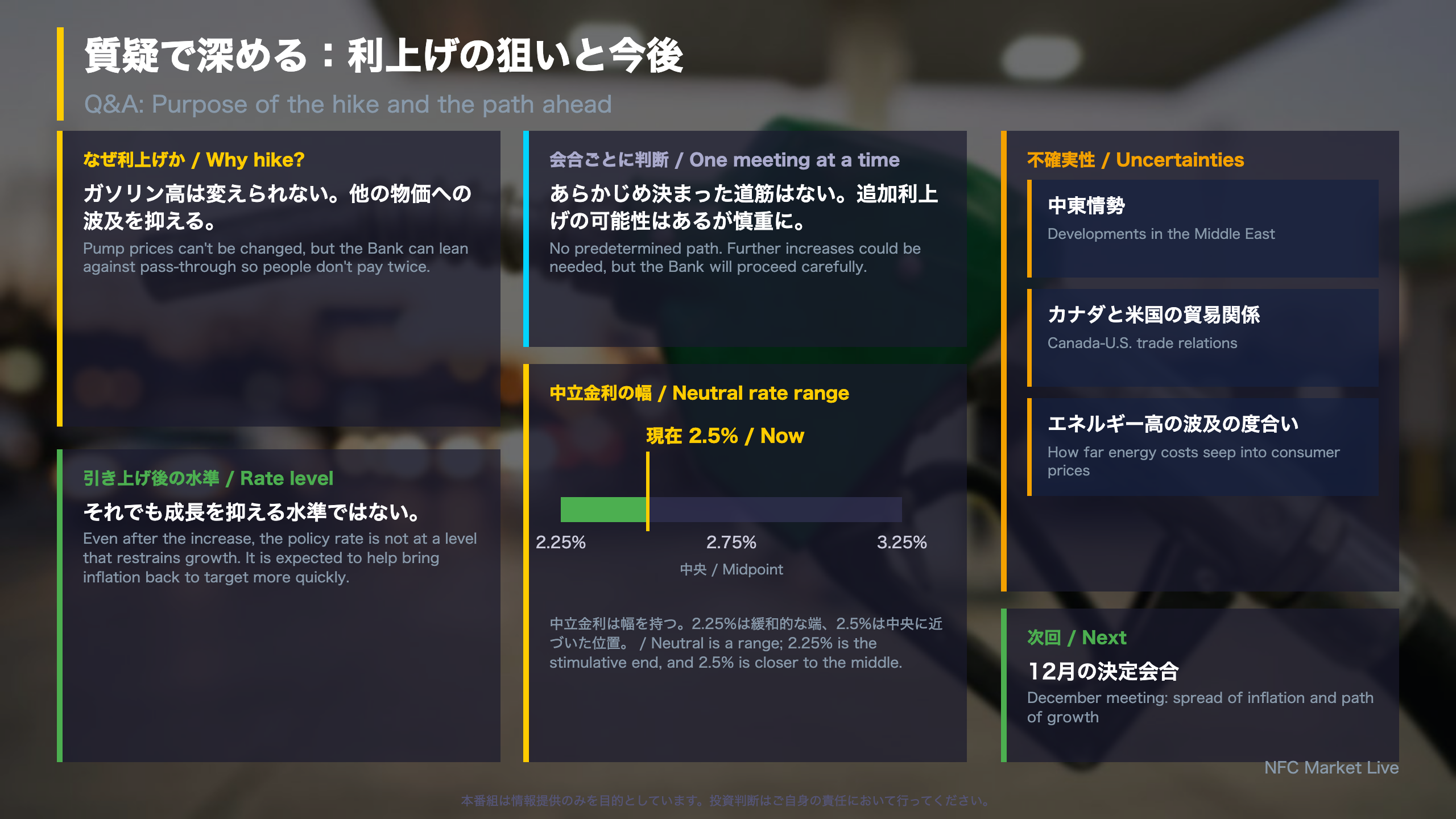
| Neutral range | 2.25%-3.25% |
| Midpoint | 2.75% |
| New policy rate | 2.5% |
Before the move, 2.25% sat at the stimulative end of the range. At 2.5% the BoC is closer to the middle. For readers more familiar with the Fed: this is comparable to discussing the neutral rate (r-star) as a range rather than a single point. The Governor declined to prejudge the next decision.
How Governing Council decided
Senior Deputy Governor Carolyn Rogers said the Council first agreed on the outlook, then debated hold versus hike as a stress test. The deciding factor was the shift in the balance of risks to inflation, with a very strong consensus.
Difference from the post-COVID episode
The Governor said that after COVID the economy was clearly overheated with excess demand. Today there is still some slack, which should dampen pass-through, though slack is narrowing as growth proves resilient and cost pressures rise. The Bank built a new economic model after COVID to better capture such dynamics.
Fiscal policy and uncertainty
A federal fuel tax relief measure is already built into the forecast, and further fiscal choices are left to elected governments. Rogers said that a Middle East resolution or an easing of U.S. trade tensions could change the picture, though neither looks imminent.
“There could be a need to raise the policy rate further, but given the uncertainties, we will proceed carefully.”
What to watch
The December meeting is next. Track energy prices, the breadth of inflation and the depth of the Q4 growth slowdown. This is a summary of the Bank’s own statements, not a market forecast.
Disclaimer: This article is for informational purposes only. All investment decisions are made solely at your own risk.